
A Closer Look at Stone Skulls
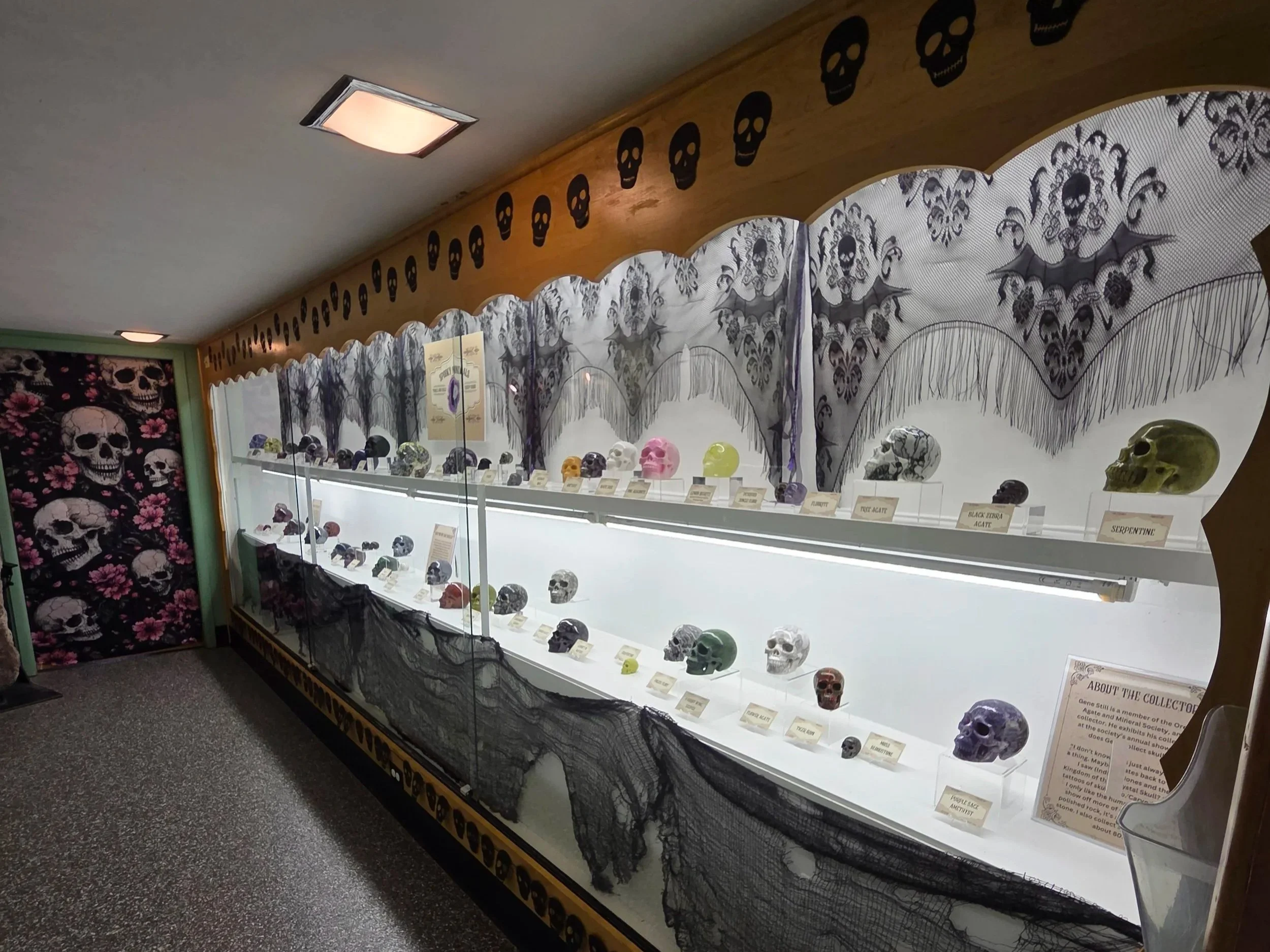
Stone skull display.
October is an especially fitting time to visit the Rice Museum and take a closer look at one of our most eye-catching displays: a collection of skulls carved from a variety of rocks and minerals.
At first glance, stone skulls may seem spooky—or perhaps a little mysterious. But these remarkable carvings are also an invitation to appreciate the artistry, color, pattern, and hidden beauty found inside the Earth’s materials. Each skull begins as a piece of stone or crystal, then becomes something entirely new through the skill and patience of a lapidary artist.
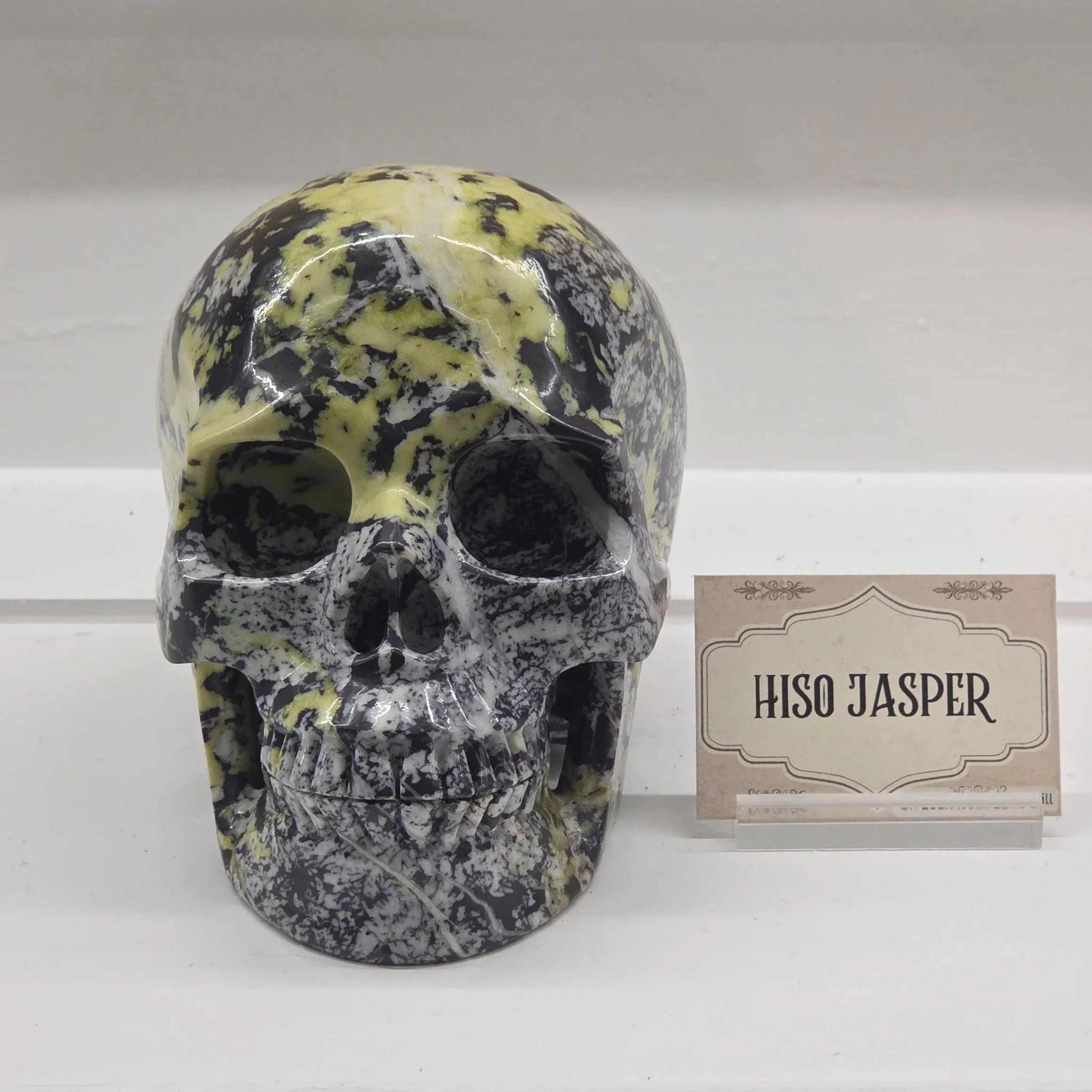
Hiso jasper stone skull.
From rock to skull
Creating a stone skull is a detailed process. Large pieces of rock or crystal are first cut into cube-shaped blanks using a rock saw. From there, artists shape the material with handheld or shaft-driven carving tools, including angle grinders and Dremel-type tools. Fine details are carved in gradually, transforming a simple block of stone into recognizable features: eye sockets, cheekbones, teeth, and the curve of the cranium.
After the carving is complete, the skull is polished—often in a large barrel tumbler—to bring out the stone’s natural luster and reveal the colors, banding, crystals, and other features within the material.
The work is done wet, either in water or with a water drip, to keep stone dust from becoming airborne. This is an important safety practice: fine mineral dust can be hazardous when inhaled and may contribute to serious respiratory illnesses, including silicosis.
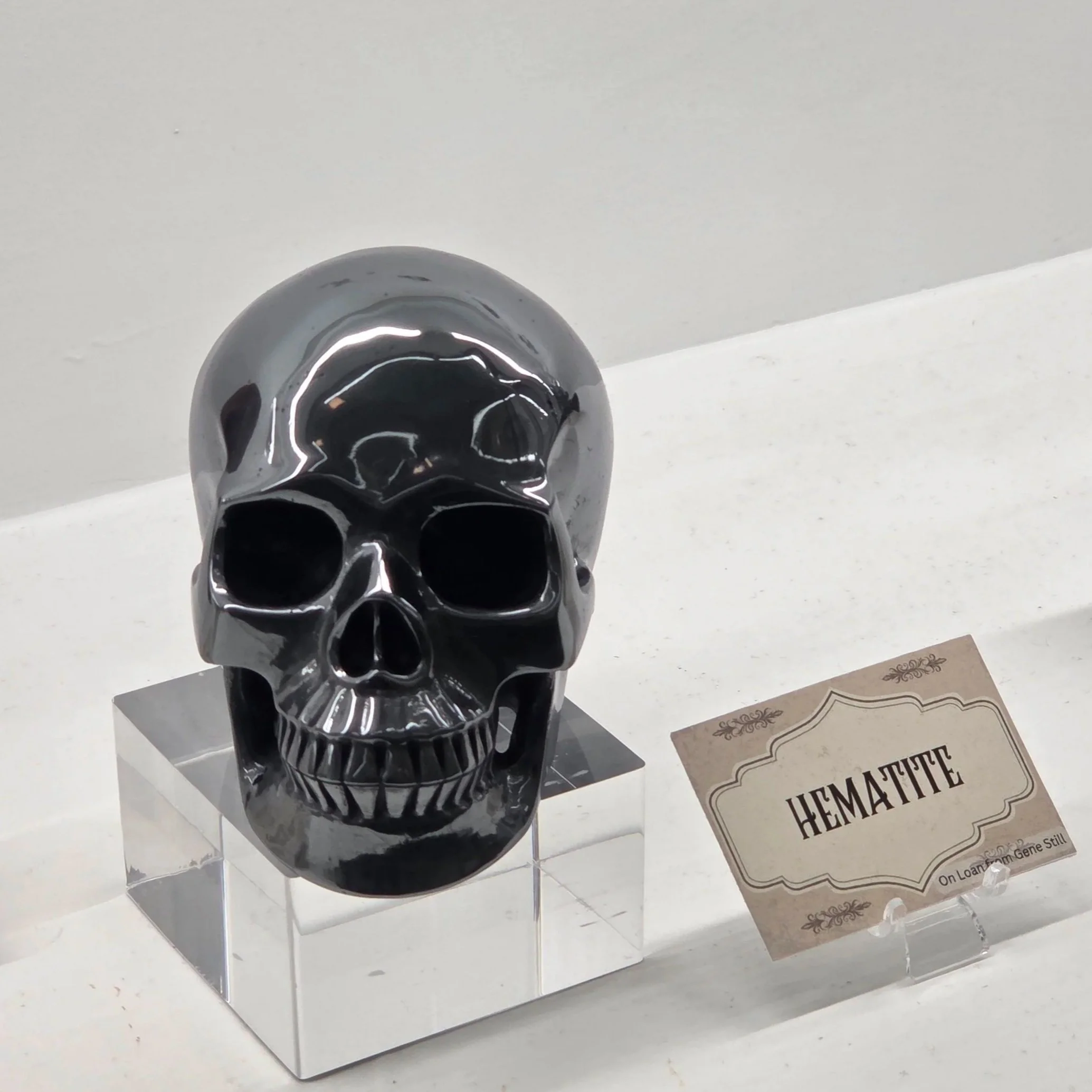
Hematite stone skull.
Why skulls?
Skulls have been powerful symbols across cultures and throughout history. They can represent mortality, remembrance, persistence, spirituality, protection, transformation, reuse, and rebirth. Yet they also have an undeniable visual appeal.
Unlike most bones, skulls can seem to have an expression or personality. A row of exposed teeth may read as a sly grin, a friendly smile, or something more mysterious—depending on the viewer. And, of course, there is the playful truth that most of us carry one with us everywhere we go.
For some visitors, skulls are fascinating precisely because they are a recognizable human form. For others, the appeal is in the craftsmanship: a carver’s ability to take an ordinary-looking piece of stone and reveal its potential through shaping and polish.
If skulls are not your favorite subject, that is perfectly okay, too. These museum skulls are simply polished stone—although, as the exhibit notes, they are “probably not haunted. Much.”
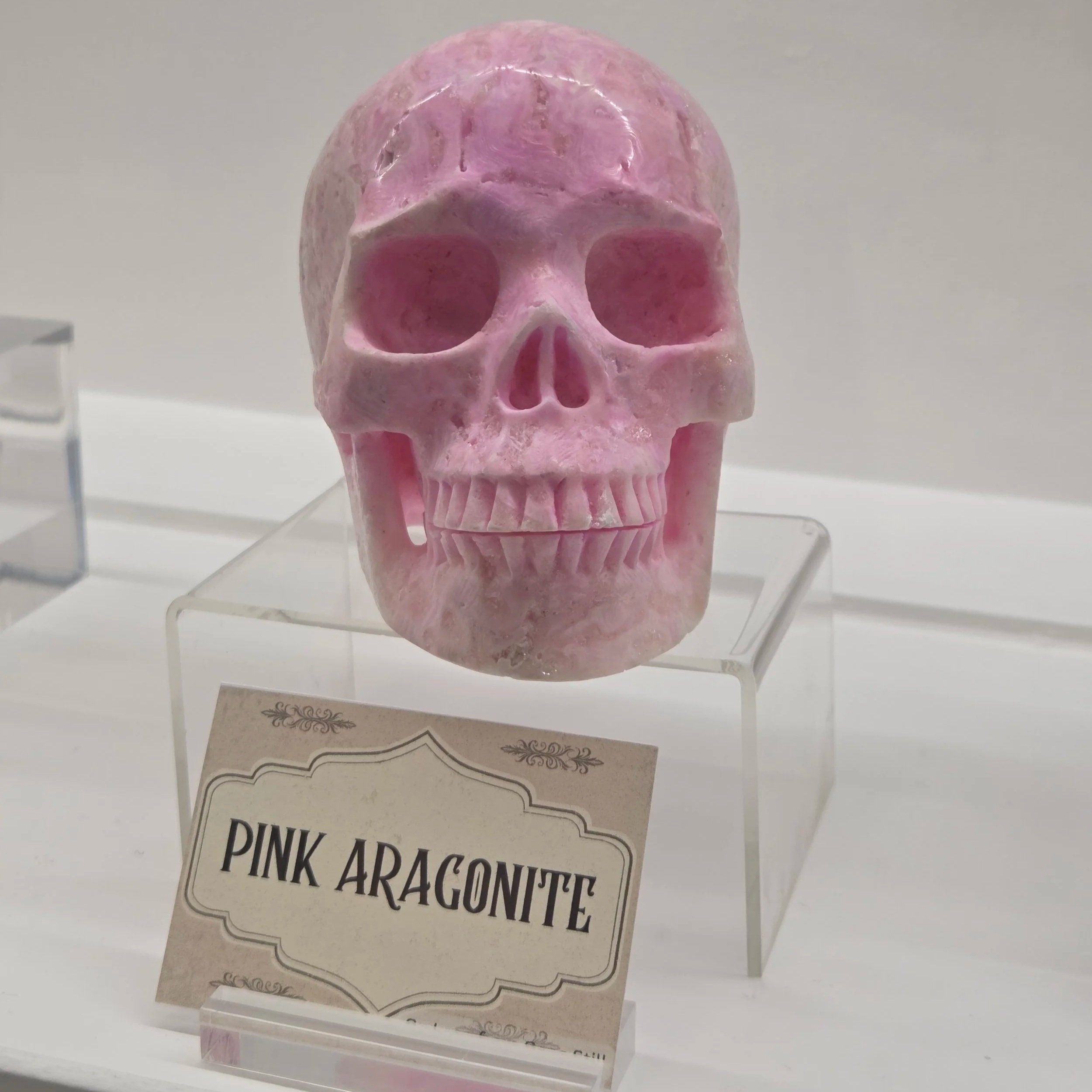
Pink aragonite stone skull.
A collector’s passion
The exhibit comes from the collection of Gene Still, a member of the Oregon Agate and Mineral Society who displays his collection at the society’s annual show.
Gene says his interest in carved skulls has “just always been a thing,” perhaps dating back to seeing Indiana Jones and the Kingdom of the Crystal Skull. He also has skull tattoos and enjoys collecting carved skulls—especially human skulls—because they show off what can be found inside a polished rock.
That idea is at the heart of this display. A carved skull does more than imitate a familiar form. It gives the stone a chance to shine. Every mineral has its own character, from subtle cloudiness and dramatic veining to sparkling crystals, translucent layers, or richly varied color. The carving becomes a small sculpture and a close-up encounter with geology at the same time.
Gene’s interest in collecting also extends to stone spheres—he has about 80 of them—another form that highlights the natural beauty of polished rock.
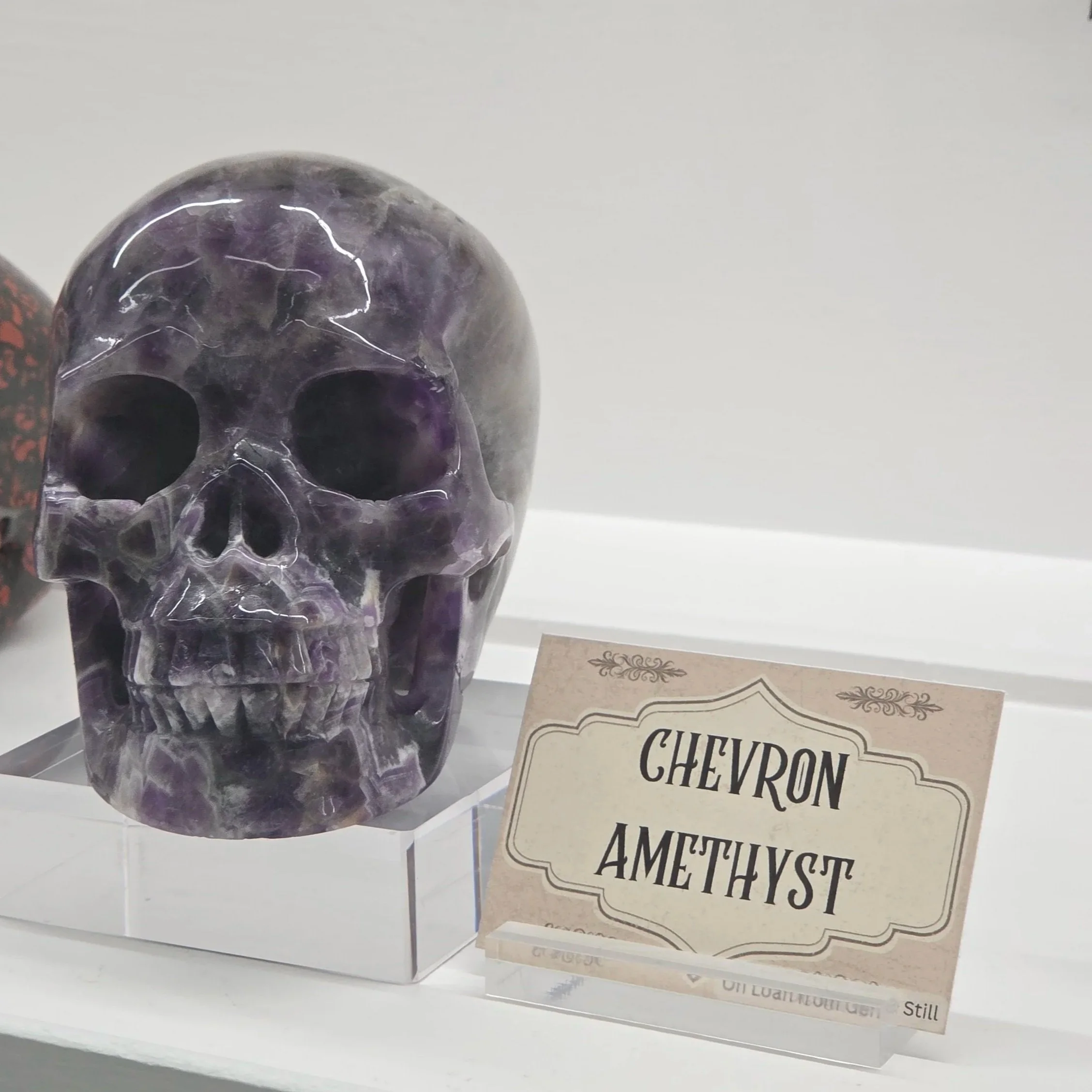
Chevron amethyst stone skull.
See the exhibit this October 2026
As October brings a season of spooky stories, costumes, and Halloween traditions, stop by the Museum to meet these stone skulls in person. Whether you find them eerie, charming, funny, beautiful, or all of the above, they offer a memorable reminder that rocks and minerals can become art in the hands of a skilled maker.
Come explore the collection, look closely at the materials, and decide for yourself: do the skulls look solemn, mischievous, friendly—or perhaps just a little haunted?
