
Our Founders
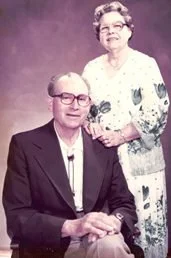
The Rice Northwest Museum of Rocks and Minerals was founded by Richard and Helen Rice. The following is a historical summary of the creation and development of the Museum.
1938
Richard and Helen Rice began their love affair with rocks as the result of a weekend family outing to the Oregon Coast. While on this trip they picked up a handful of agates and jaspers they simply thought were pretty. A local rock shop polished the stones and revealed their beauty. After seeing the transformation of these seemingly ordinary pebbles into beautiful stones, their lifetime romance with rocks and rock collecting began.
Soon after their beach agate collecting experience, the Rices joined a new club in Portland, the Oregon Agate and Mineral Society (OAMS). Through OAMS they learned about and took part in field trips where they could find thundereggs, petrified wood, carnelian, moss agate and other beautiful rocks of the Northwest. They enjoyed this so much that they took an active role in the leadership of OAMS.
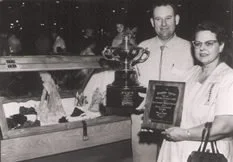
Around this time they also became active in the Northwest Federation of Mineralogical Societies’ gem and mineral shows and other activities, leading to involvement in the American Federation of Mineralogical Societies (AFMS). Helen Rice served as President of the American Federation in 1959-1960. During her term as President, Helen also served on the AFMS committee that wrote the first set of “Uniform Rules” for competitive exhibits at the Federation shows. She was also instrumental in the AFMS obtaining IRS 501(c)(3) status as a non-profit educational organization.
1952
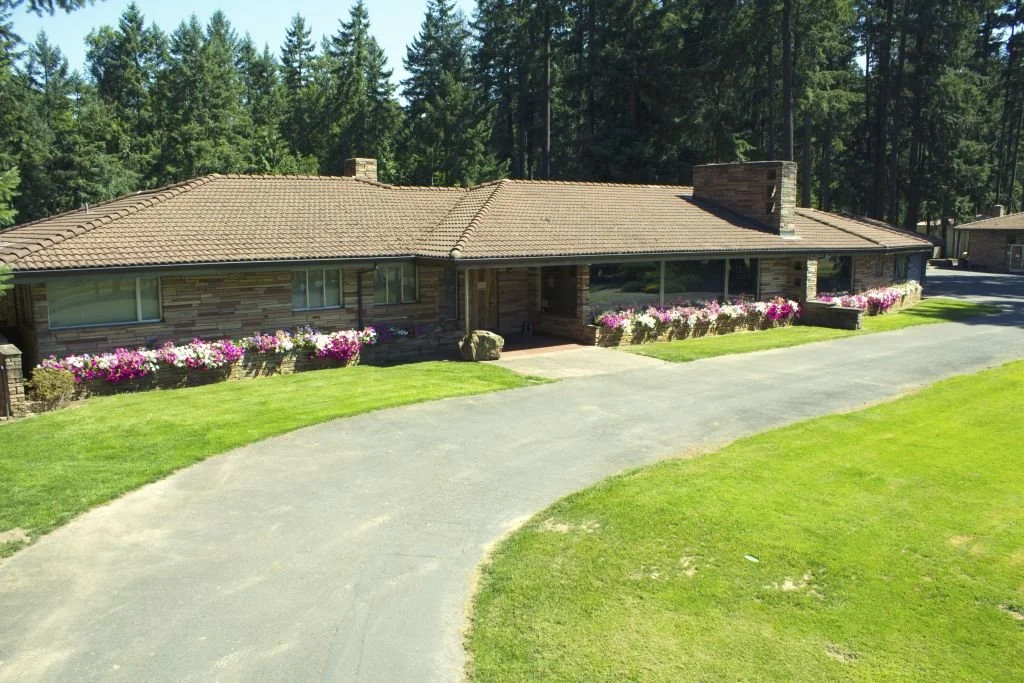
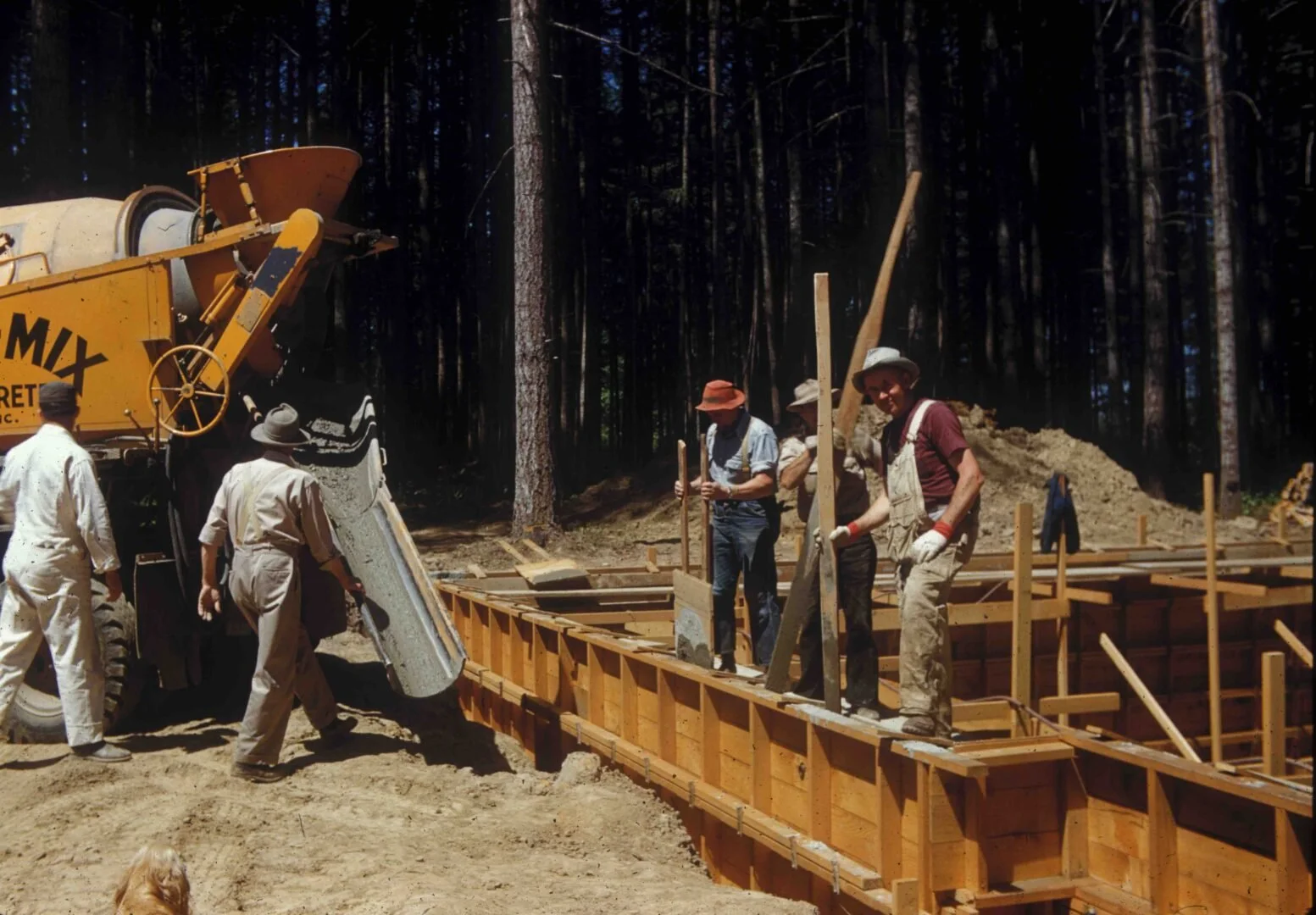
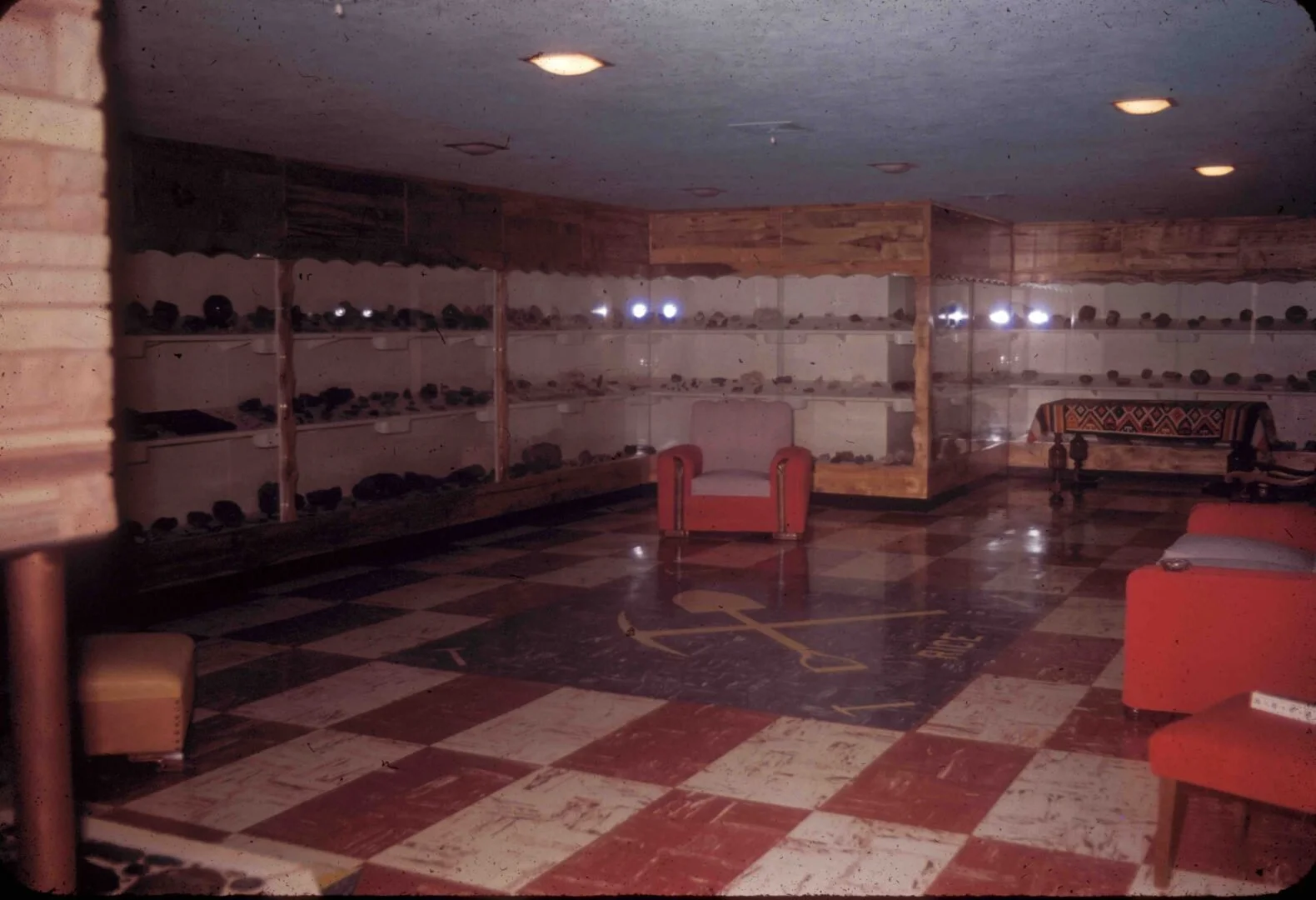
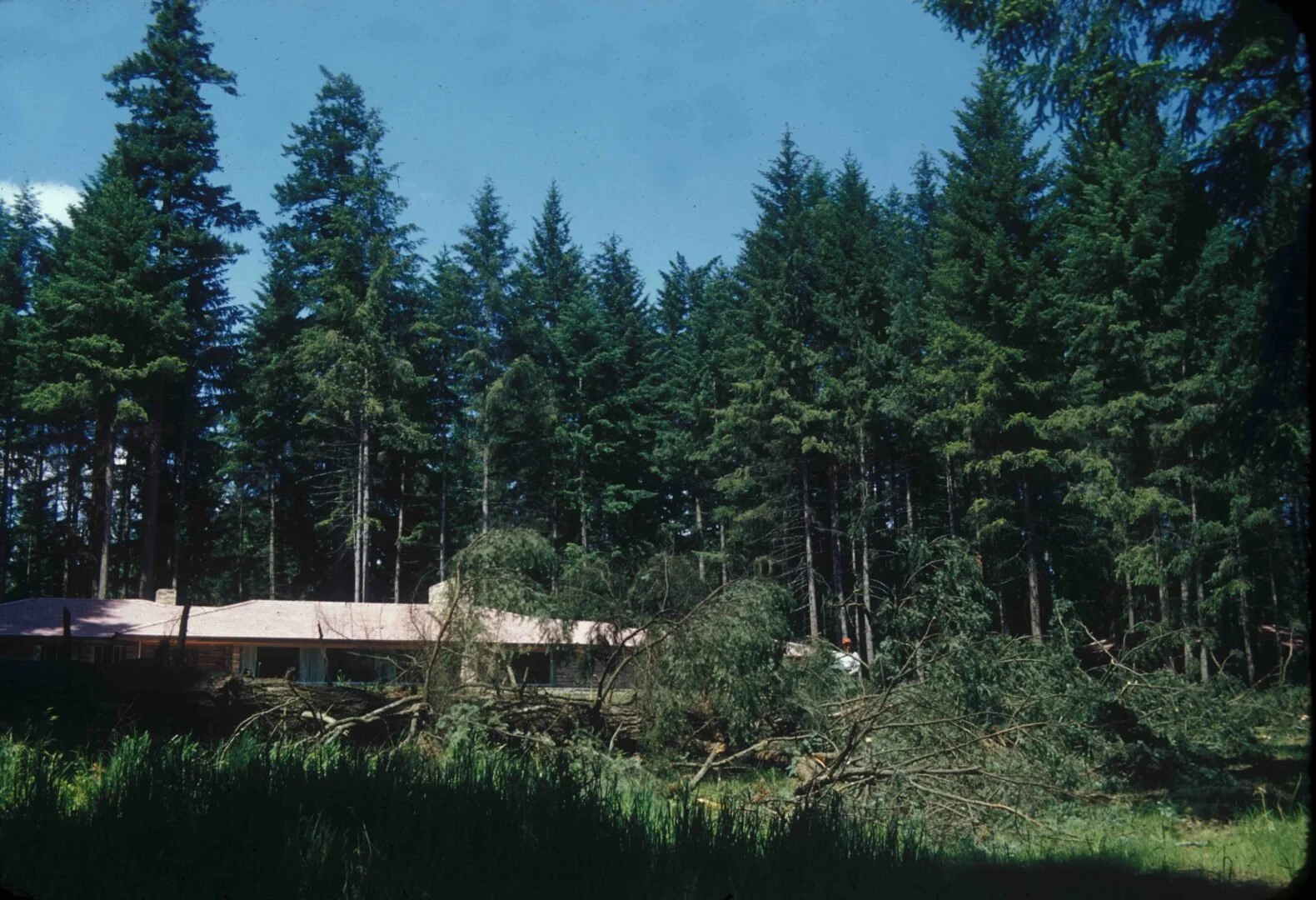
Richard and Helen Rice began construction of their “dream house” designed around their rockhound hobby. The key feature of this house was a full gallery of lighted, built-in showcases in the basement.Their love of nature and earth science is obvious in the Rice’s use of natural materials for the construction of their home. They visited the flagstone quarries in northern Arizona and watch workers cut and load boxcars with the stone that would ultimately be used in their home construction.
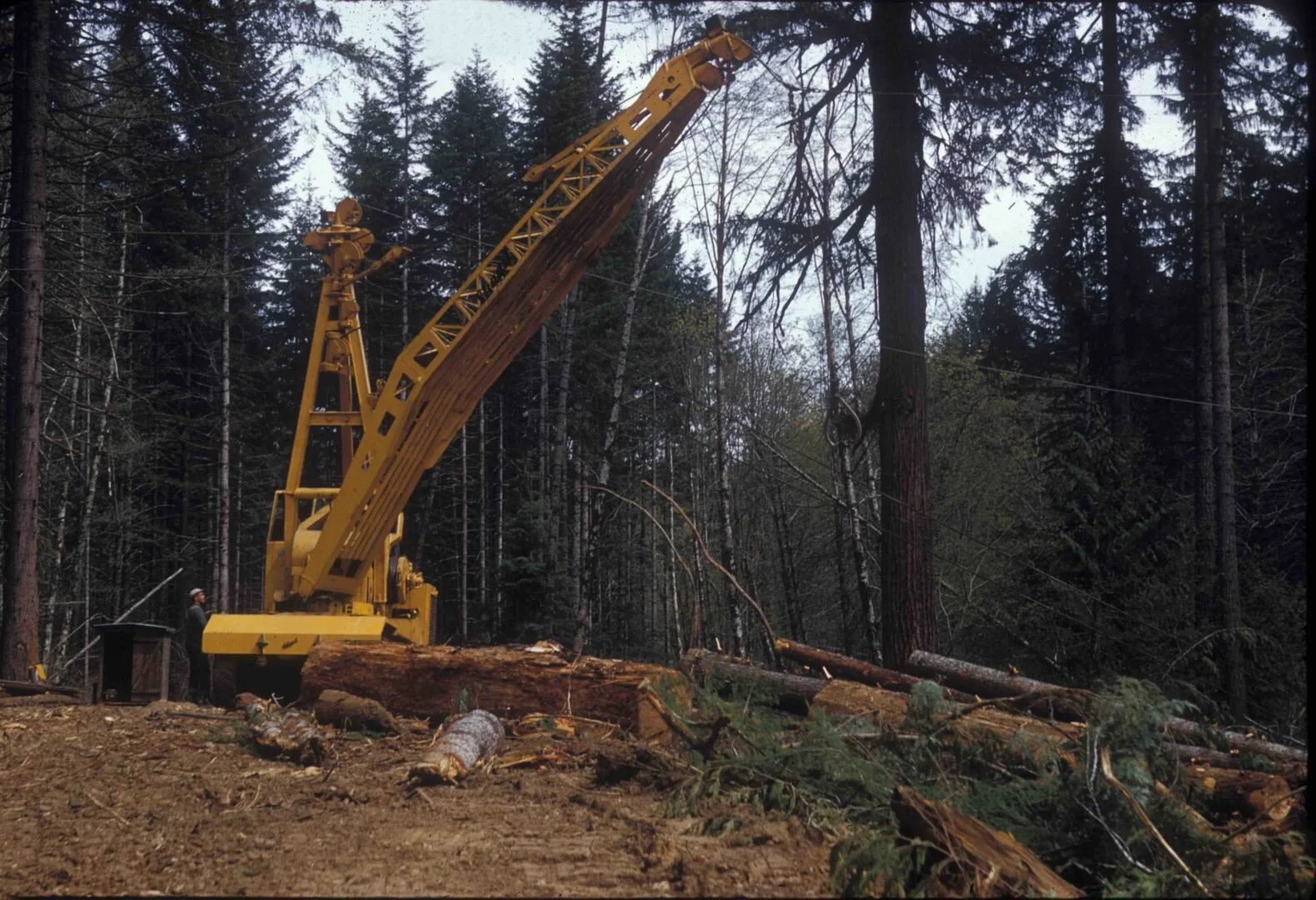
Richard, a logger by profession, discovered a couple of downed myrtlewood trees while working in Coos County on the southern Oregon coast. Richard purchased the trees and personally logged them for use in the woodwork in the home. Near Vernonia, Oregon, he logged the maple tree that produced the beautiful quilted maple pattern used for the pantry area and kitchen cabinets. He chose cedar for the underside of the exterior eves. Richard worked with a friend to build a portable sawmill to cut the logs for lumber for the house. He negotiated with a working mill on the Willamette River to kiln-dry the lumber. In exchange, he agreed to sell a raft of Douglas Fir logs he had been storing on the river.
The beautiful tile used in the dining room fireplace and the basement kitchen area was purchased in Mexico during a winter agate and mineral collecting trip.
The use of these materials at that time and the design of the house was very unique and was a major factor that placed the residence on the National Registry of Historic Places.
1950-60s
The Rices, along with Don and Lee Kendall, George and LaVerne Williams, and many other rockhounds in Washington County, Oregon, decided it would be a good idea to have a club in Forest Grove, closer to local residents. The Tualatin Valley Gem Club (TVGC) was established in 1957. Richard and Helen spent the rest of their lives as active members of TVGC. They were eventually rewarded by TVGC and also the Oregon Agate and Mineral Club (OAMS) with lifetime memberships. They remained active in both clubs throughout their lifetimes. Both clubs played an important part in the development of the museum, supplying volunteers and more.
TVGC especially played a huge part in the development of the Rice Museum. For many years free classes were held in the basement of this museum building to study micro-minerals. Club members also attended free classes here to learn how to make jewelry that showed off their fine lapidary specimens. Helen and Richard hosted many club board meetings in their home, as well as sponsoring work parties to assemble newsletters and to build Federation-standard show cases for use in the gem shows. During this time, the Rices expanded their collection from lapidary specimens only, to include crystallized mineral specimens.
1996
The Rices, now well into their 80’s, decided they wanted to preserve their world class collection and make it available for all those interested in the earth sciences. They incorporated the museum as a non-profit private operating foundation. The Rice Northwest Museum of Rocks and Minerals was approved by the IRS as a 501(c)3 non-profit organization in 1997. It was organized on a permanent basis for educational and scientific purposes to ensure that it continued to grow and serve the public when the Rices were no longer able to curate the museum.
In a letter to the IRS, the Tualatin Valley Gem Club noted, “We know of no other museum in the Pacific Northwest that contains such a variety of large, high quality crystal and mineral specimens from world wide localities.” It further noted that, “The proximity of the Museum to Portland and its metropolitan area and the easy accessibility from Interstate 5, I-84, and Highway 26 make the potential for many visitors taking the opportunity to see this outstanding collection.”
1997-Present
Since opening to the public, the Rice Northwest Museum of Rocks and Minerals has continued to grow, evolve, and inspire new generations of visitors. Every room in the original Rice home has been thoughtfully transformed into gallery space, and the garage now serves as the museum store. The Rices’ former workshop was renovated into the Northwest Gallery in 2005, providing additional space for rotating exhibitions and special displays.
In the years that followed, the museum’s exhibits and educational outreach expanded significantly through partnerships and community support. The renowned petrified wood collection of Dennis and Mary Murphy remains a cornerstone of the Northwest Gallery. The meteorite exhibit—originally created in partnership with Portland State University’s Cascadia Meteorite Laboratory in 2002—was refreshed in 2014 and continues to fascinate visitors with specimens from around the world and from Oregon’s own high desert.
Throughout the 2010s and 2020s, the museum strengthened its role as an educational resource and community hub. Field trips, summer camps, and hands-on programs now serve thousands of K–12 students annually, helping young learners connect earth science with Oregon’s geology. Volunteer educators and members of local clubs—including the Tualatin Valley Gem Club, Mt. Hood Rock Club, Oregon Agate and Mineral Society, and Pacific Northwest Chapter of Friends of Mineralogy—continue to sponsor exhibit cases and share new specimens and stories with visitors.
A major milestone in the museum’s history came in 2017, when it was designated an official Smithsonian Affiliate. This recognition connected the Rice Museum to the Smithsonian Institution’s network of museums and cultural organizations, opening doors to new collaborations, traveling exhibits, and educational opportunities.
The COVID-19 pandemic in 2020 temporarily closed the museum’s doors but also inspired innovation. During this time, the museum expanded its digital presence—introducing online virtual tours, educational videos, and outdoor programming that allowed safe community engagement. When in-person operations resumed, attendance quickly rebounded, supported by renewed community enthusiasm and the debut of updated exhibits.
Recent years have brought continued progress. In 2023 and 2024, the museum enhanced its campus with updated signage, revitalized landscaping, and new outdoor exhibit areas. Exhibits highlighting Oregon’s mining heritage, fluorescent minerals, and Northwest fossils have been refreshed with newly acquired specimens and interpretive technology. The museum’s volunteer and membership programs also grew substantially, reflecting strong community commitment to its mission.
Now approaching its 30th anniversary as a public institution, the Rice Northwest Museum continues the vision of Richard and Helen Rice—celebrating the beauty and science of the Earth and making it accessible to all. With ongoing partnerships, dedicated volunteers, and support from a growing audience of visitors, the museum stands poised for its next chapter of educational innovation and discovery.
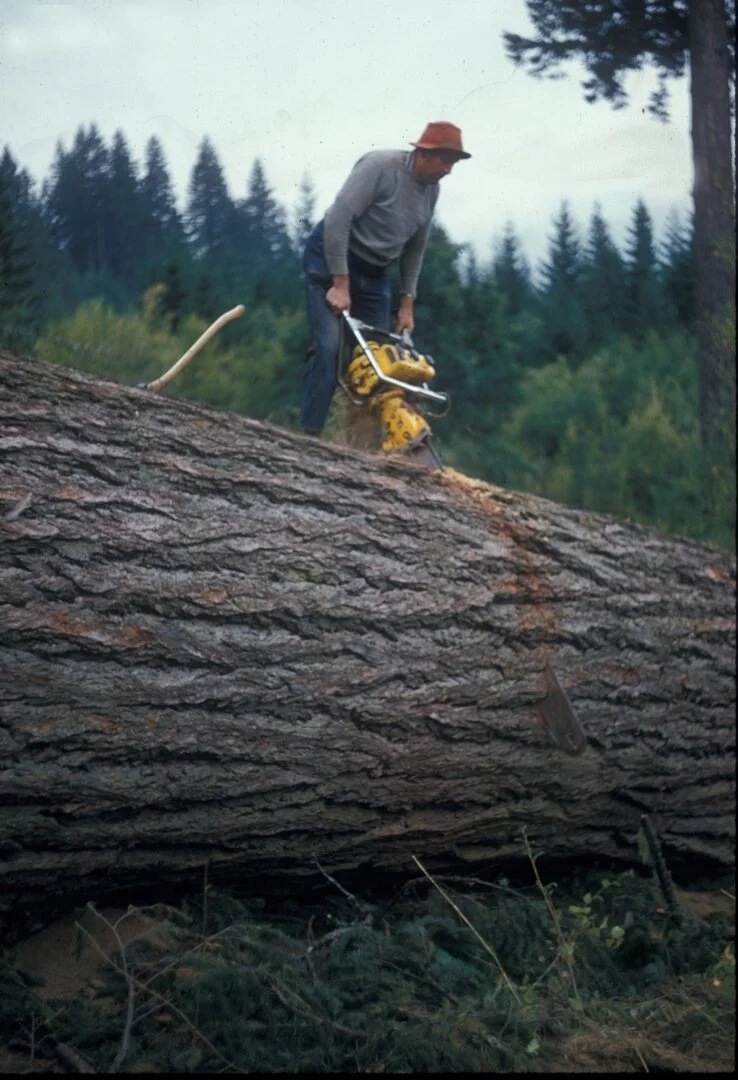
In addition, Richard purchased other small lots of timber and logged them. Depending on the price of timber, he would supplement income by other caterpillar operations. He built logging roads and fire access roads for the state; performed salvage operations for Multnomah County after the 1948 Vanport Flood; and cleaned up after the 1964 fire that destroyed the Forestry Building in northwest Portland, the last remaining in-situ building from the 1905 Lewis and Clark Exposition. Richard retired from logging at age 75 and sold the last quarter section of the 640-acre purchase to Hampton Lumber in 1993 at the peak of lumber pricing.
Richard Rice
Logging History
Richard was raised on the family farm and began his life’s work in the timber industry when he was hired by North Plains (OR) independent logging operator, Chester Bates as a caterpillar driver at the age of 14. He continued to drive “cat” for Bates, on and off as work was available, until World War II. During the war he worked in the Oregon Shipyards in Portland.
Following WWII, he was able to purchase his own Caterpillar D6 track type tractor/bulldozer and worked independently for small timber owners as a “cat skinner.” He soon began buying small lots of timber and, in his own words, became an “independent logging operator.” He then upgraded equipment to a D7 cat. Amongst his peers, he held the reputation as “the best darned cat skinner in the county.” Around 1943, Richard purchased at public auction a section (640 acres) of old growth timber near the town of Timber, Oregon for a price of $4,600. This purchase was the principal source of income for the Rice family, including construction of their “dream house,” acquisition of major mineral specimens for the collection, and retirement income.