
Digging In: Restoring the Museum’s Native Habitat
Thanks to a TREE Grant from the Tualatin Soil and Water Conservation District (TSWCD), the Museum has teamed up with Ash Creek Forest Management to restore and reimagine part of the museum’s natural landscape.
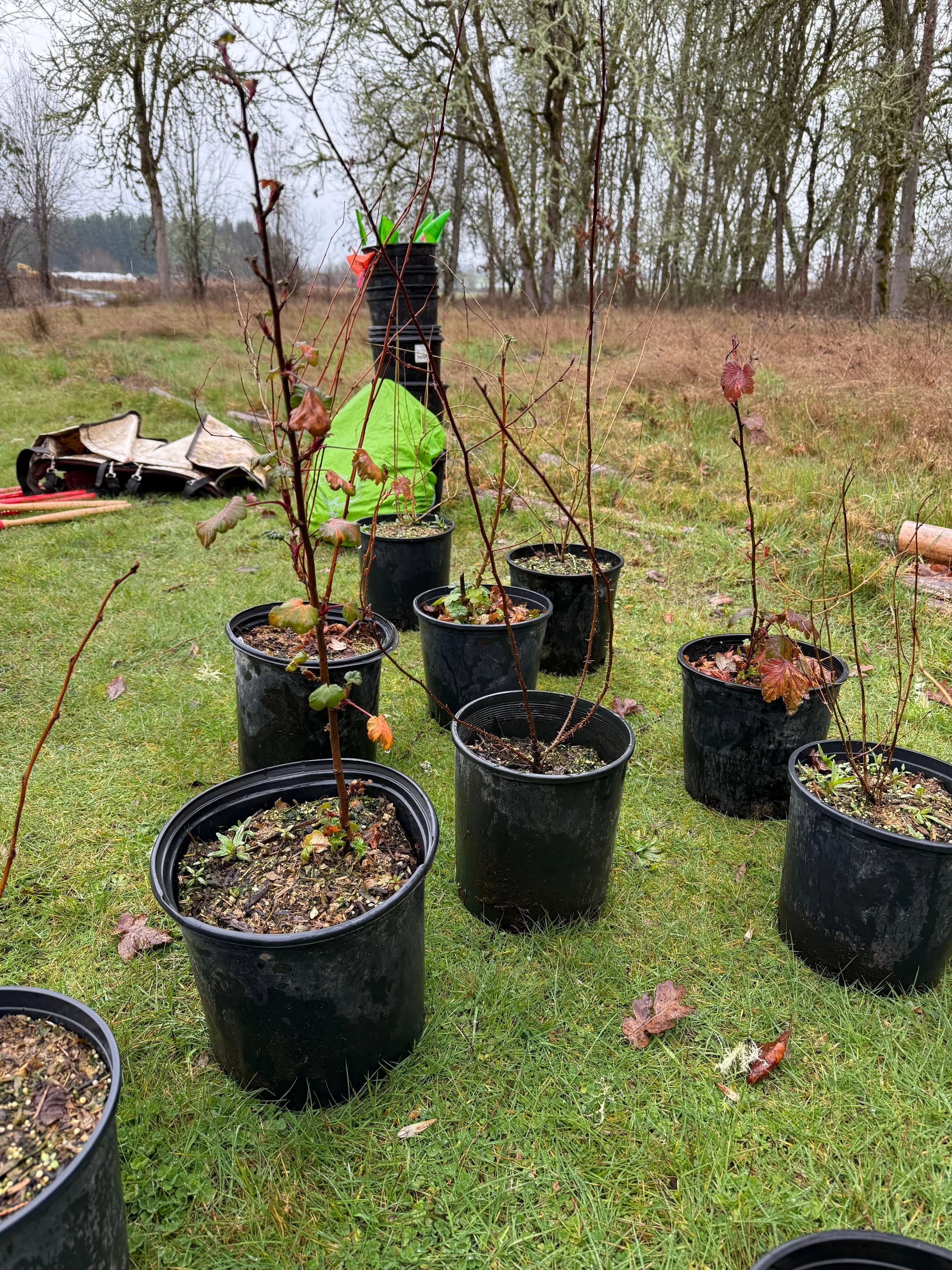
Native species ready to be planted.
This project will transform a previously degraded area, where Douglas‑firs and red cedars have suffered dieback, into a vibrant Oregon white oak savanna. The effort will restore 12 acres of habitat through oak release, expanded pollinator zones, and invasive species control—building a healthier, more resilient ecosystem across the museum’s campus.

Aerial view of the Museum showing portion of 12 acres that will be restored (right hand side).
Public engagement is a big part of the plan. Visitors will be able to follow the restoration journey through school and camp field trips, interpretive signage, and online updates.

Ash Creek and students from Rachel Carson Environmental Middle School selecting locations to plant the native species.
As part of this work, students from Rachel Carson Environmental Middle School joined Ash Creek’s restoration specialists to plant native species such as Red Osier Dogwood, Thimbleberry, Red Flowering Currant, Dense Sedge, and Slender Rush. Their first field trip took place recently, when students helped plant the first phase of this new landscape.
Ash Creek’s restoration team guided planting activities near the historic Rice family home. The TREE Grant supports these hands‑on learning experiences, connecting classroom lessons about ecology and conservation to real-world action. Students will rotate through activity stations exploring native habitats, soil and water conservation, and the science of healthy ecosystems.

Rachel Carson Environmental Middle School student digging a hole to plant a native species.
This collaboration blends education, restoration, and community partnership. With expertise from Ash Creek, support from TSWCD, and the enthusiasm of young learners, the project is creating lasting environmental impact—right here in our backyard.
This is just the first of several field trips planned this season, with more plantings and learning days on the way this spring. We can’t wait to watch the landscape flourish—and see students grow as future environmental stewards.
