Students Bring 3D Scanning Technology to Life at the Museum
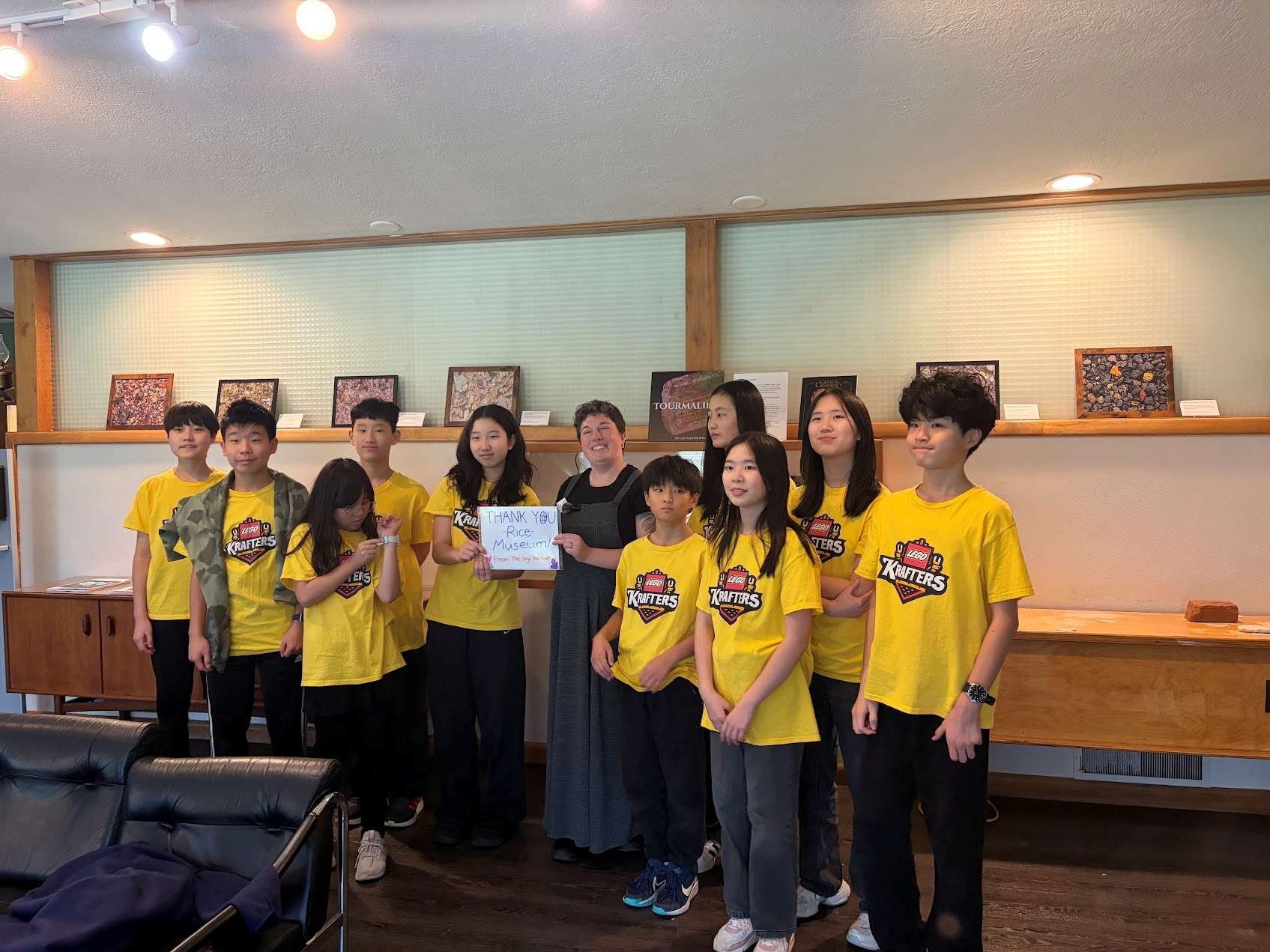
A group of students ranging from 4th to 8th grade recently demonstrated 3D scanning technology at the Rice Northwest Museum of Rocks and Minerals, showing how emerging tools can be used to measure and preserve fragile artifacts without physical contact.
Using LEGO-built rigs and their parents’ smartphones, the students scanned delicate items suggested by the museum, including meteorites, petrified wood, and quartz—objects many of the kids had previously encountered only in textbooks. This visit allowed them not only to see the artifacts in person but also to digitally capture their shapes and dimensions.
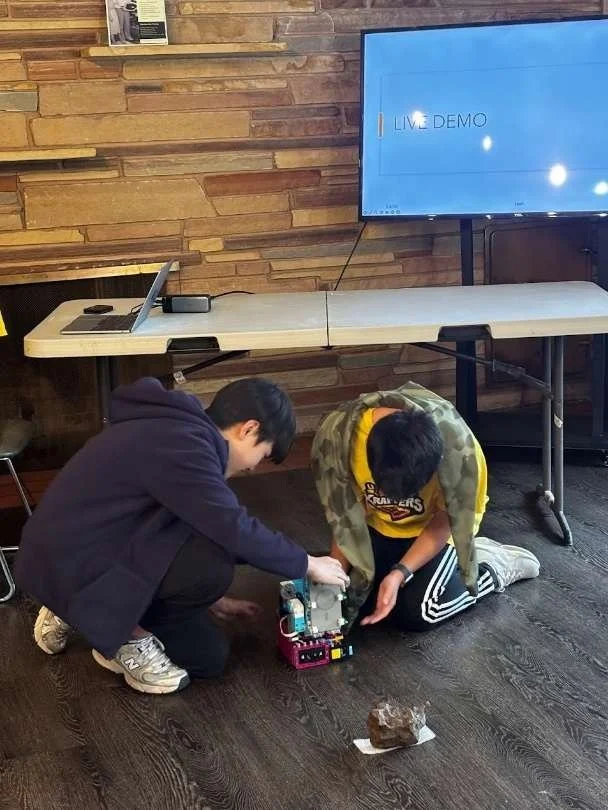
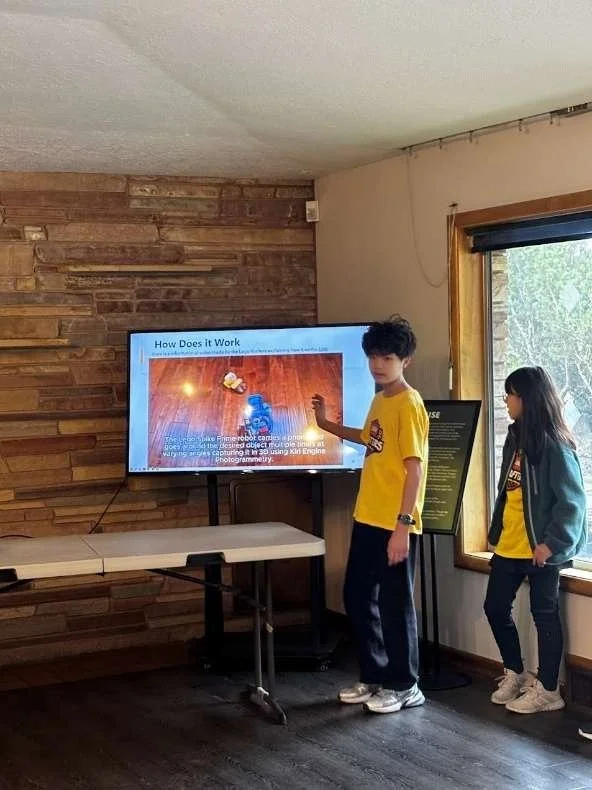
During the main demonstration at the museum, a LEGO robot circled each artifact while a smartphone equipped with LiDAR technology collected depth data. The phone app then generated a detailed 3D model of the object. Students uploaded these models to laptop computers and demonstrated how to measure key dimensions such as length, height, and angles of complex structures.
This approach offers clear advantages over traditional measurement tools like rulers or angle meters. Manual handling can risk damaging delicate artifacts, and measuring irregular or complex shapes is often challenging. By contrast, the students used freely available software to analyze the 3D models, allowing accurate measurements while keeping the original objects untouched.
Community Outreach and Virtual Access
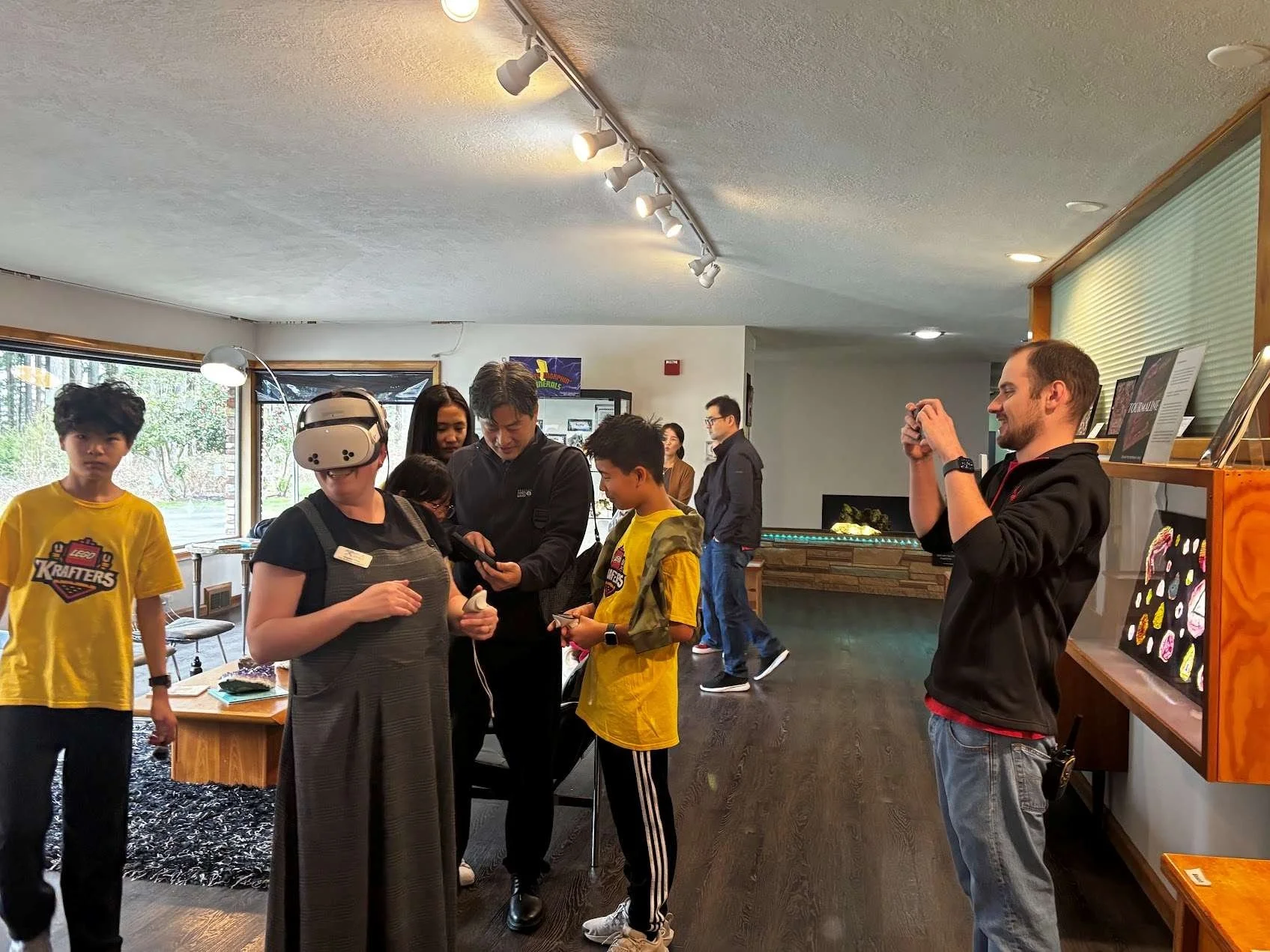
The students’ work extended beyond on-site demonstrations. They also showed how scanned artifacts can be loaded into commercial virtual reality (VR) devices, allowing users to interact with the objects in an immersive digital environment.
“One question we asked was how we could share these 3D images with more people in Oregon—or even around the world,” said Leah Kim, 14. “One idea we explored was uploading them into a virtual world, essentially creating a virtual library.”
Museum mentor Angela Piller agreed that this approach could significantly expand public access. She noted that virtual exhibits are especially valuable for people who cannot visit the museum due to geographic distance or circumstances such as during a pandemic. The fact that the demonstrations used relatively inexpensive tools—smartphones, LEGO components, and consumer VR devices—shows that this technology is increasingly accessible and scalable.
The team is currently planning another event in the spring, where they hope to showcase their work to more local students and families.
From Curiosity to Real-World Solutions
This project is part of the team’s Innovation Project for this year’s FIRST LEGO League (FLL) season, which challenges students to use technology to solve real-world problems related to exploration, preservation, and access.
The LEGO Krafters began by asking how technologies like 3D scanning could support archaeology and museum operations, helping institutions protect history while improving efficiency. Museum mentor Angela Piller played a critical role early in the season by sharing real challenges faced by museums, which gave the students a concrete problem to investigate.
The team realized that many modern smartphones already include 3D scanning capabilities—commonly used for face recognition. Their first prototype did not involve robotics at all. Instead, they used a Lazy Susan turntable with a phone mount. By placing an object at the center and rotating it, they were able to capture images from multiple angles. Adjusting the phone’s height and tilt allowed them to collect sufficient data for a full 3D scan in about 10 minutes.
They soon discovered a limitation: the size of objects they could scan was restricted by the diameter of the turntable. To overcome this, the students adapted the LEGO robot they use in competitions. The robot could drive around larger artifacts, adjust its scanning radius through Python programming, and use motors to change the phone’s height and angle during data collection.
The demonstration at the Rice Northwest Museum marked the culmination of months of prototyping and iteration. Through the process, students practiced identifying a real-world problem, developing solutions, testing prototypes, refining designs, and eectively communicating their results—core learning principles promoted by FIRST LEGO League.
About the LEGO Krafters
The LEGO Krafters’ achievements extend well beyond the museum. The team recently earned 1st Place at the Oregon FIRST LEGO League State Championship and will represent Oregon at the FIRST LEGO League World Championship in Texas later this month.
The team also reflects a strong sense of community and continuity:
There are three pairs of siblings on the team
Four team members are 8th graders who will age out of FLL this year and plan to continue robotics programs in high school
A younger sibling, Aiden, has attended every team event and hopes to officially join the team next year as a 4th grader, symbolizing the next generation of STEM learners
By combining technical skill, creativity, and collaboration with local institutions, these students demonstrate how youth-led innovation can make a meaningful impact today—while inspiring the engineers, scientists, and museum professionals of tomorrow.